What Is a Smart Factory?
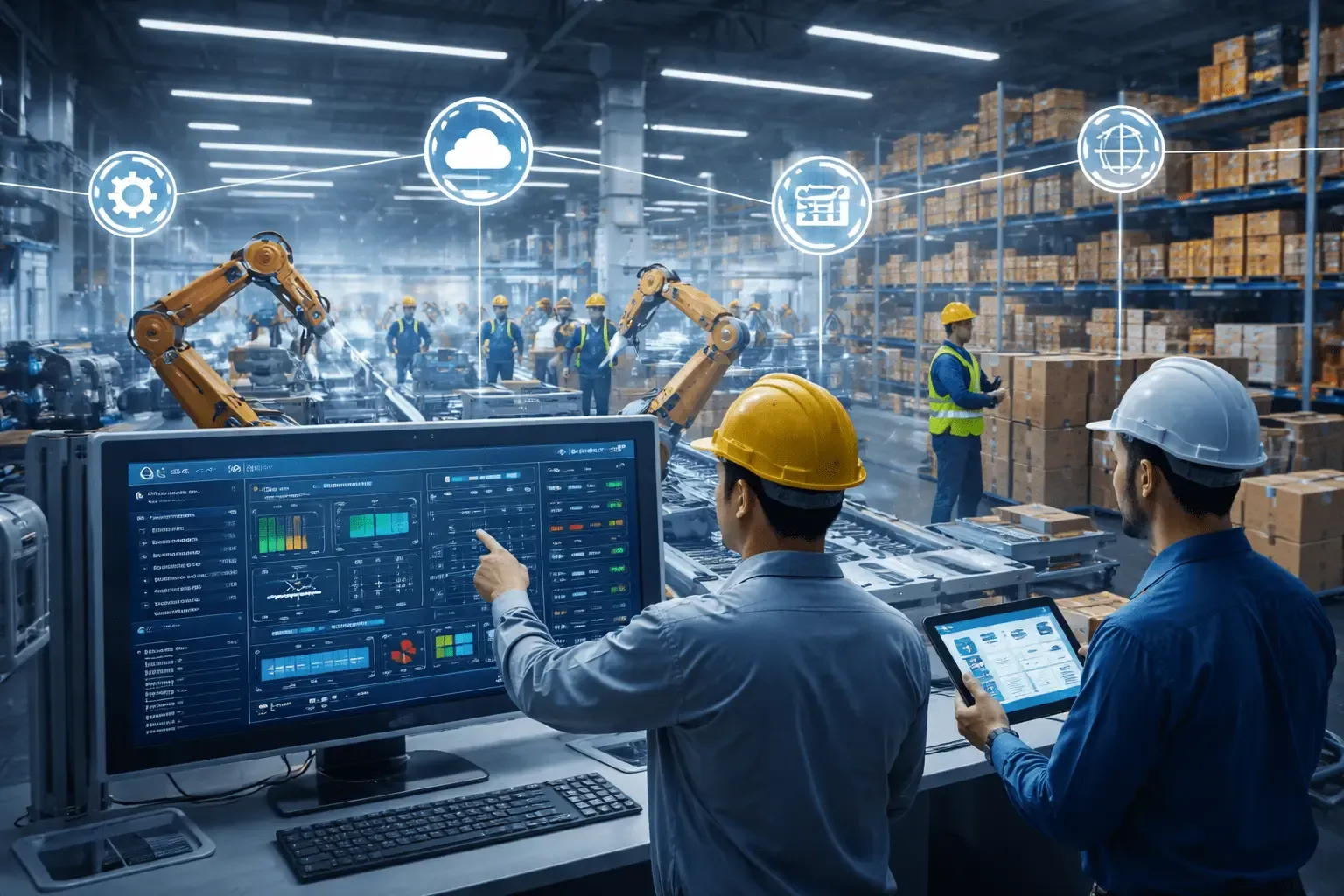
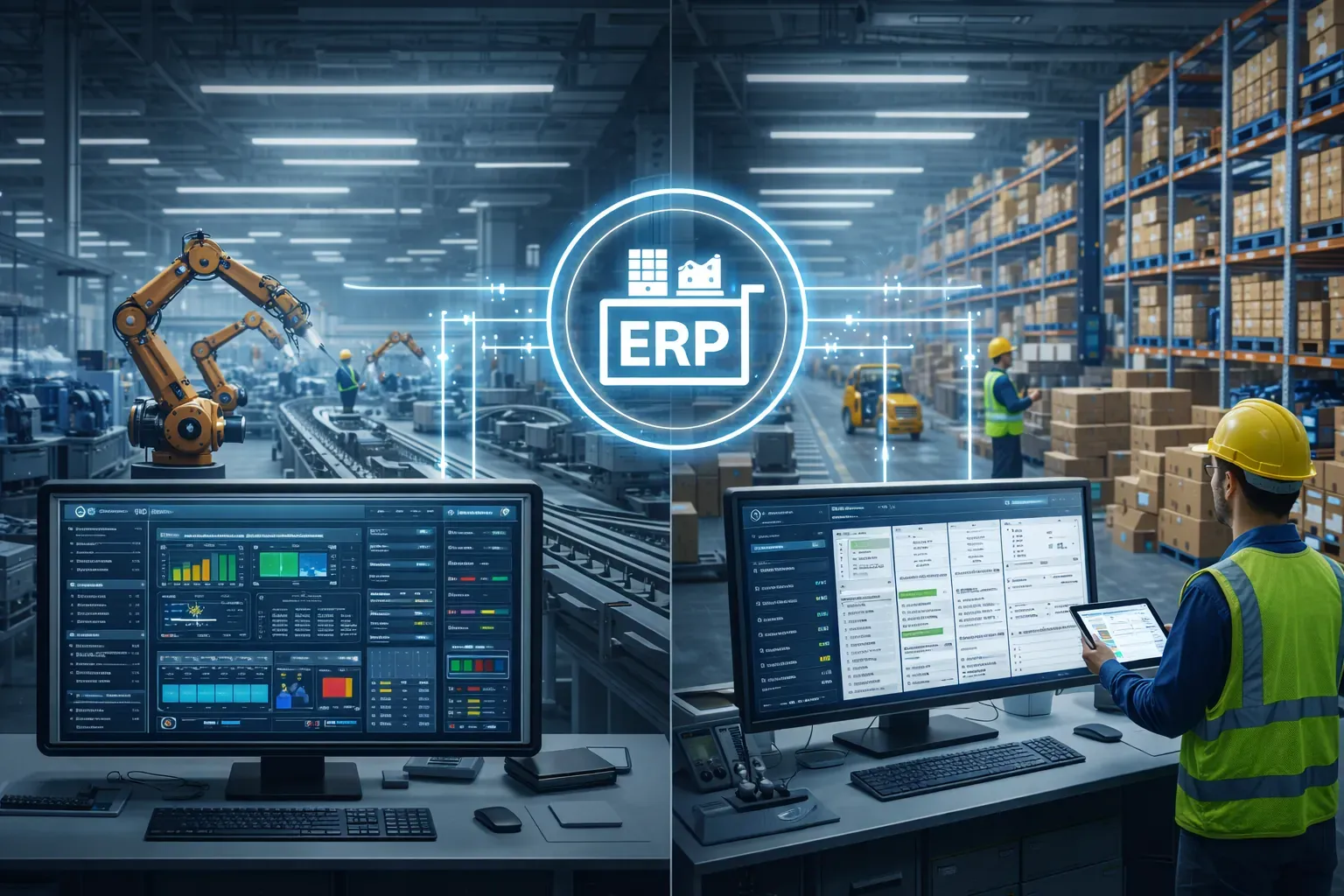
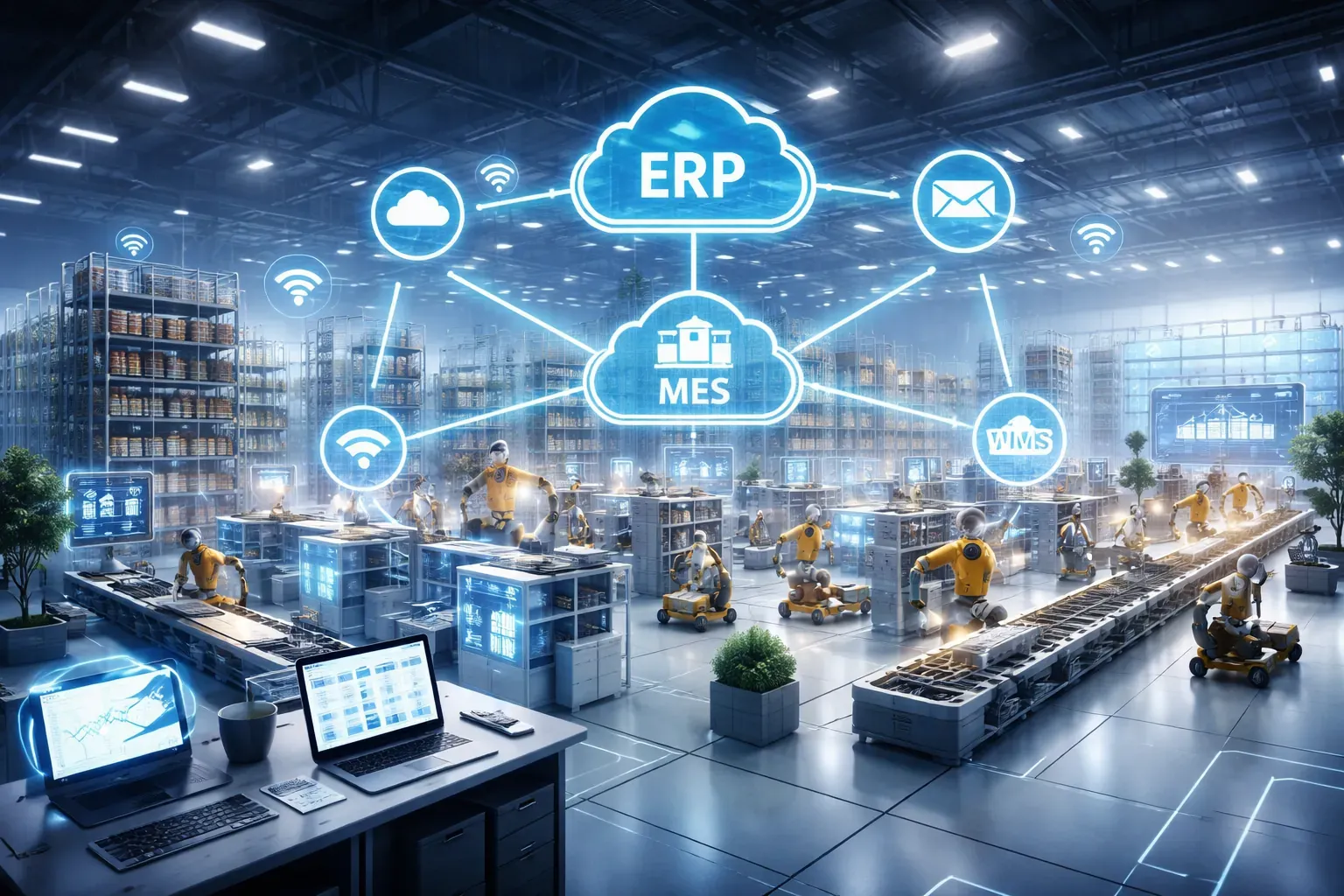
A smart factory is a fully connected operation where ERP, MES, warehouse systems, and machines exchange data in real time. It goes beyond simple monitoring; it enables autonomous decision-making and seamless data orchestration.
As we explored how a custom MES transforms manufacturing, the MES serves as the foundation of shop-floor control. A smart factory builds on this foundation by integrating ERP planning, IoT data, and WMS execution.
End-to-end connectivity turns operations into an agile manufacturing system by enabling:
- Shorter Lead Times
React instantly to order changes. - Resilience
Adapt to supply chain disruptions without halting production. - Faster Changeover
Switch product lines digitally, not just mechanically. - Reduced Downtime
Fix problems before they stop the line.
Core Components of a Smart Factory
A Smart Factory requires an integrated ecosystem of manufacturing software working together. This aligns with the planning and logistics layers we discussed in how to build a custom ERP system:
- ERP (The Brain)
Provides supply chain visibility and financial planning. - MES (The Central Nervous System)
Controls machine uptime and executes shop floor logic. - WMS (The Hands)
Coordinates real-time stock movements and inventory accuracy. - IoT (The Senses)
Captures physical data like temperature, vibration, or pressure.
Analytics (The Insight)
Turns raw data into actionable strategy.
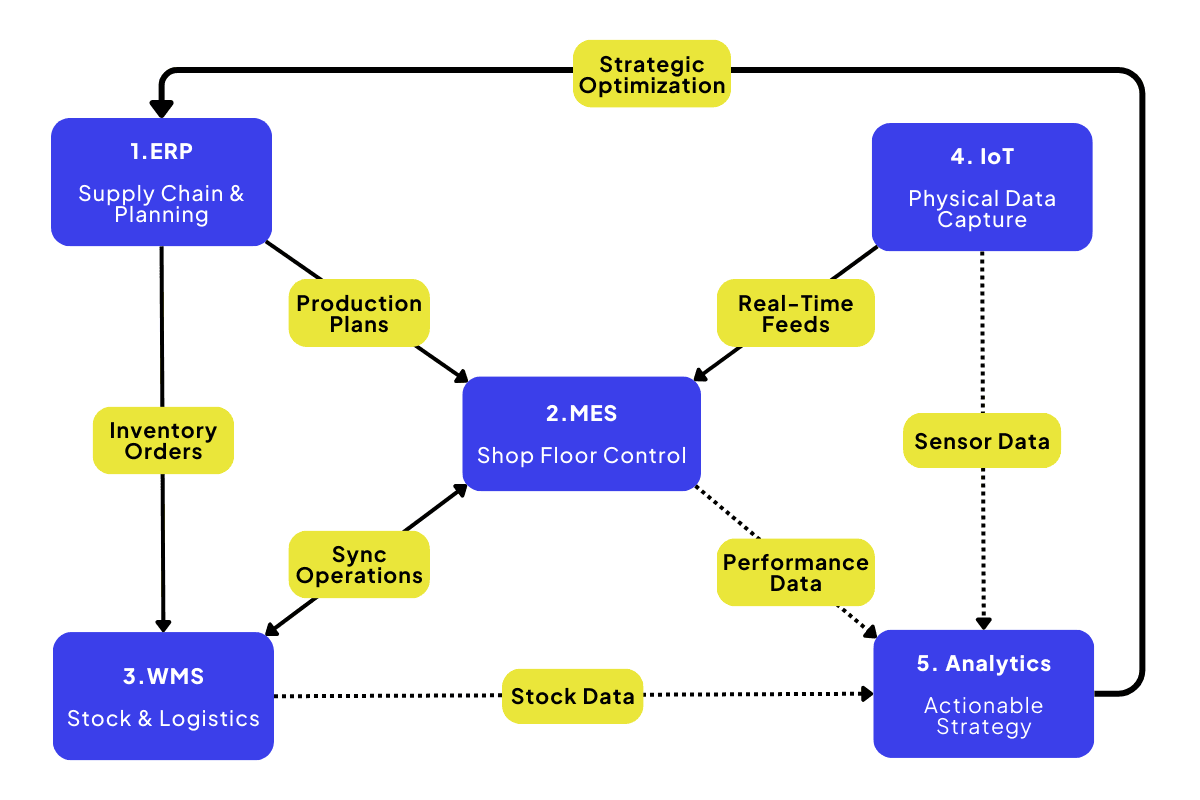
Effective warehouse management system integration is critical, yet this is often where generic software solutions fall short. Many factories operate with disconnected systems where legacy machines and modern platforms cannot communicate properly. We solve these data standard gaps so old and new systems work seamlessly together.
True optimization goes beyond speed. Producing faster without synchronizing warehouse and logistics processes only shifts bottlenecks instead of eliminating them.
Digital Twin in Manufacturing
Digital twin technology creates a virtual mirror of the physical factory by combining data from ERP, MES, and IoT. Manufacturers use digital twins as a high-impact ROI tool because they can test decisions digitally before applying them on the factory floor.
- Simulating Line Balancing
Test if speeding up Conveyor A will cause a pile-up at Station B without pausing production. - Modeling Energy Consumption
Identify peak load times to optimize utility costs. - Evaluating Throughput
Visualize if your current workforce can handle a 20% surge in orders.
For example, in a bottling plant, sensors detect abnormal motor vibration (IoT data). The system predicts a failure within 48 hours (predictive maintenance), checks spare part availability in the warehouse (WMS data), and schedules maintenance during a planned changeover (ERP data), preventing unplanned downtime.
Turn Insight into Action with Smart Manufacturing!
Cloud Manufacturing Software and IT Architecture
Industry 4.0 requires modern IT foundations. Cloud manufacturing software enables API integration, enterprise-grade security, multi-site deployment, and SaaS scalability.
This architecture allows manufacturing process software to process massive datasets for AI analysis, predictive maintenance, and cross-factory visibility that legacy servers simply cannot handle.
Custom Smart Factory Ecosystems vs Packaged Systems
Many software vendors sell a "Smart Factory in a Box," but these one size fits all solutions often fail because no two factories are identical. At commsult, we are not just software sellers; we help you build a digital system that fits your business.
This custom approach offers:
- Flexibility
We connect your existing equipment with modern systems. By using IoT gateways and proven industry protocols, we collect data from older machines without requiring costly hardware replacements. - Predictive ROI
You invest only in what delivers measurable value. We focus on outcomes like reduced downtime, lower scrap rates, and faster warehouse operations, instead of features that increase cost without clear benefit.
How commsult Build Smart Factory Ecosystems
We engineer transformation through a clear, structured process:
- Step 1: Assess & Govern
We map how data moves across your production and warehouse operations. We also define data governance standards to ensure reliable, accurate information. - Step 2: Integrate & Pilot
We connect the shop floor to the top floor by connecting your custom MES execution layer with your strategic ERP planning system. We then run pilot testing on key production lines to confirm results before a full rollout. - Step 3: Visualize & Scale
We create unified dashboards that serve as a single source of truth. Once the solution is proven, we manage scaling and change management to deploy it across your organization.
Transform Your Factory Operation
The future of manufacturing is connected. Transform your operation into a smart, data-driven factory with commsult.
Start Your Smart Factory Journey Today!